


Yamagata Wagyu Beef
Yamagata
Recommended by
Tokyo Broadcasting System Television, Inc.
Movie“JAPAN SUI COLLECTION” Introduction video “Yamagata Wagyu Beef”

An exquisite taste experience resulting from attentive fattening

Yamagata Wagyu Beef is a brand of beef from a breed of cattle called Japanese Black (Kuroge Washu). The cattle are reared in Yamagata Prefecture for longer than any other breeds in that prefecture, and they remain in the prefecture during the finishing phase. The brand is high in quality, with a grade of at least 3. Reared amid Yamagata’s hot summers and harsh winters , the beef has an intricate texture. The quality is further enhanced by the prefecture’s mineral-rich spring water. The cattle farmers take great care of their cattle every day, attentively managing the cattle’s feed formula and vitamin regimen. Such painstaking husbandry, coupled with the climatic and natural conditions, culminates in the mellow flavor and buttery texture that has earned Yamagata Wagyu Beef global acclaim.
HistoryPraised by a British gentleman
Cattle farming in what is now Yamagata Prefecture began in Tenna 1 (1681), when 2–3-year-old cattle known as “agari ushi” were transported from the Nambu region to the Okitama region (in the south of Yamagata) for use as beasts of burden and for meat production. In the late 19th century, Okitama's cattle farmers began marketing their beef under the brand name Yonezawa Beef after a British teacher named Henry Dallas praised the quality of the beef. Cattle farming then proliferated across Yamagata Prefecture, sparking a number of local beef brands. In 1962, the prefectural governor spearheaded a project to group these beef brands together under a common set of standards using the umbrella term Yamagata Wagyu Beef.

OriginWorking with rice farmers

In Yamagata, temperatures range widely between summer and winter and between daytime and nighttime. These conditions give the beef its intricate, marbled texture, known in Japanese as shimofuri or sashi. Another environmental factor that contributes to the beef quality is the prefecture’s abundant spring water. To enhance animal comfort and hygiene, the farmers use plenty of rice husks, supplied by local rice farmers, for bedding in the cattle sheds. Cattle dung is converted into fertilizer and provided to local farmers. Thus, in an example of sustainable farming, the byproducts of rice farming contribute to cattle farming and enhance the quality of the beef.
AppealThe knowhow and care behind the great taste

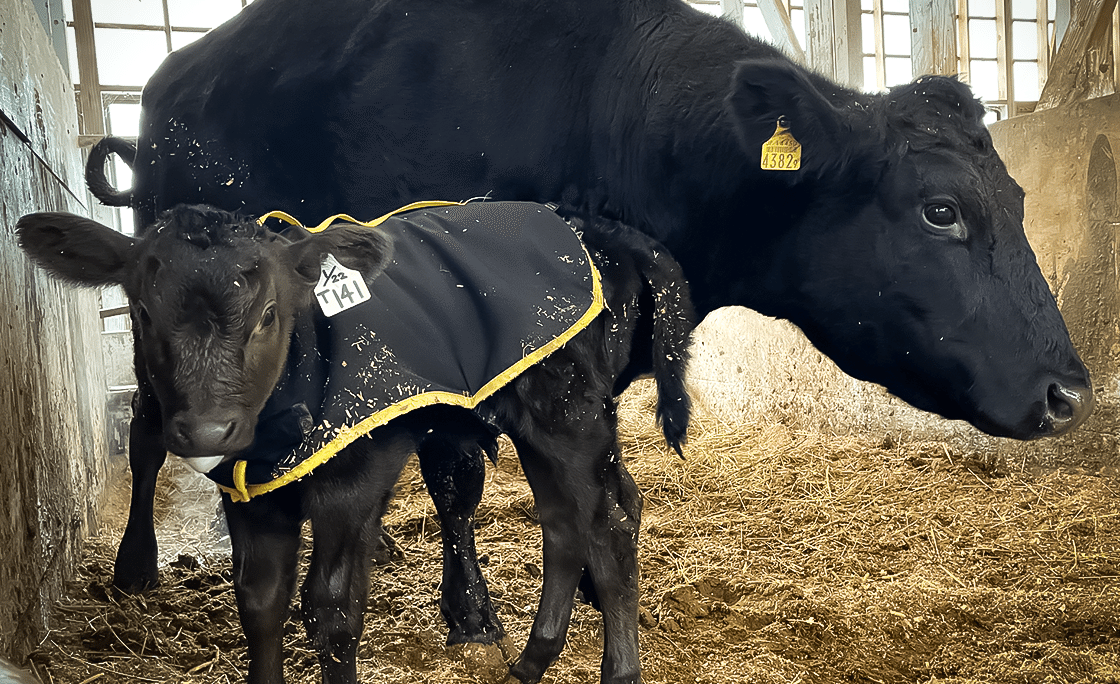
Nobels Mogami, a cattle ranch in Mogami, Yamagata Prefecture, maintains a thousand-strong herd of heifer calves, which are shipped at 28 to 30 months of age. The herd’s genetic make-up, diet, and composition are attentively managed to ensure the finest quality of beef. Great care is taken to maximize animal comfort. For example, the cattle are grouped into four-heifer units to create a relaxed, low-stress environment, and the cattle are groomed with brushes when they shed their winter coats in the spring. During the fattening process, Nobels Mogami uses an original feed formula to increase the percentage of oleic acid—a fatty acid that gives the meat its sweet and mellow flavor. Such attentive husbandry and technical knowhow underlie the quality associated with Yamagata Wagyu Beef.
CraftsmanshipNutrition and monitoring are the secret behind the marbled texture

The cattle are fed grass, wheat straw, feed formula, and rice straw, with the composition and quantities strictly controlled. In the initial fattening phase, calves are given access to a pasture rich in dietary fiber, allowing their digestive system to develop. Their grain intake is then progressively increased. Vitamin A intake is also carefully controlled, so as to give the beef its signature marbled texture, known in Japanese as shimofuri or sashi. Besides managing nutritional composition, feed quantities, and feed timing, the farmers monitor the condition of each animal. Such care and watchfulness contribute to the beef’s rich flavor and exquisite marbled texture.
VisionA growing international audience
“Wagyu” is now a worldwide household name associated with fine dining. Among the wagyu brands, Yamagata Wagyu Beef has gained global recognition for its mellow flavor and buttery texture thanks to the coordinated promotional efforts of the cattle breeders, slaughterers, and distributors. The promotional strategy involves bringing the unforgettable taste experience to an international audience; as part of this, Yamagata Wagyu Beef makes an annual appearance at a summer trade fair held by an upmarket Hong Kong retailer and features in high-class Japanese restaurants in Australia. The strategy also involves showcasing the meticulous husbandry, knowhow, and quality control; as part of this, ranch and factory tours are organized for overseas buyers, importers, and chefs. It is therefore no surprise that the brand is gaining a strong audience in Asia and Australia.

Achievements
- ・Winner of the Wagyu Prize at the 36th Yokohama Meat Fair
- ・Winner at the 2nd Tohoku Fair held at the Yokohama Meat Market


Recommended byTokyo Broadcasting System Television, Inc.
-
Iwate Wagyu Beef
Iwate
Business Contact:Tokyo Broadcasting System Television, Inc.
-
Japanese Sake (Hiraizumi Honpo)
Akita
Business Contact:Tokyo Broadcasting System Television, Inc.